
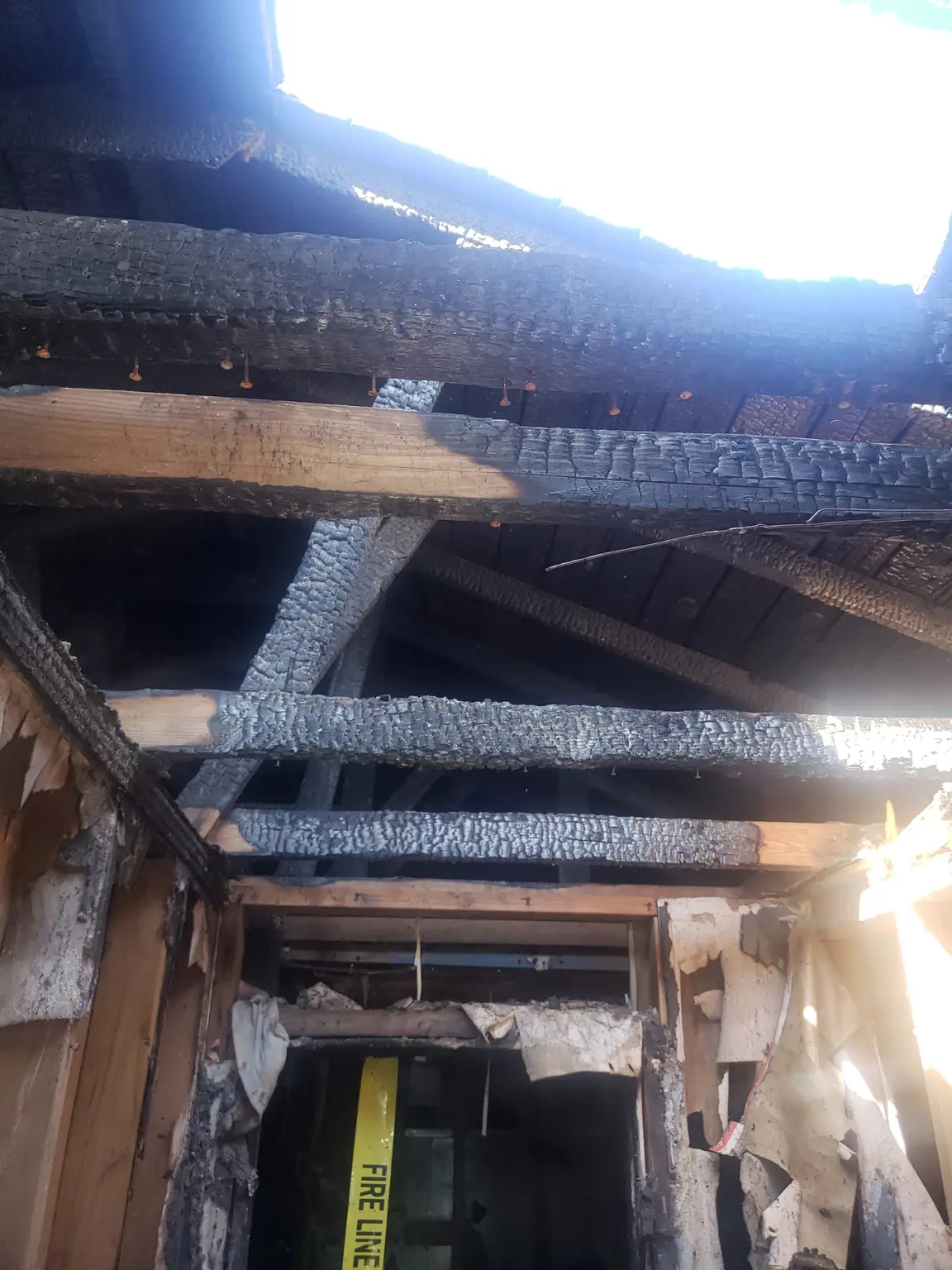
The house is partially burned. The insurance adjuster has come and gone. You’re staring at a 60-to-180-day claim timeline, a vacant property accruing tax and elevated insurance premiums, and a phone full of contractor bids that don’t match the payout offer.
If you’re a Fresno-area homeowner sitting in that exact spot in 2026, this guide walks through the three real paths you have, the ACV-vs.-RCV mechanic that decides which one nets more after taxes, and the math we run on every fire-damaged property we look at.
Short version: you can sell during the open claim, you don’t have to wait for the carrier to finish paying out, and the rebuild-vs.-cash decision is almost always less about the property and more about your time horizon.
The Three Real Paths After a Fresno House Fire
Every fire-damaged sale conversation in 2026 boils down to one of these three:
Path 1 — Take the insurance payout and rebuild
You file the claim, get an ACV check at 45–90 days, then either an RCV stage payment after repairs are documented or — under California’s Fair Plan and most major carriers — staged construction draws. You hire a general contractor, pull permits, and rebuild over 9–24 months under post-fire wildfire-resilient code.
The reality check on this path: after the January 2025 LA wildfires, more than 13,000 homes were destroyed. Twelve months later, just 28 had been rebuilt. The math gap between insurance proceeds and 2026 rebuild cost ($350–$900 per square foot for a typical 1,500–2,500 sqft Fresno-area home = $525K–$2.0M to fully rebuild under current code) is the reason.
Path 2 — Sell DURING the open claim, route the ACV proceeds at closing
You disclose the open claim, sign an assignment-of-proceeds rider with your carrier where applicable, and the closing attorney routes the ACV check at funding. You walk away with: (a) the ACV portion of the claim, plus (b) the cash-sale proceeds from the damaged parcel. You forfeit the recoverable-depreciation stage that would only have paid after documented repairs.
This is the path most owners pick when they’re not in a position to be their own general contractor for 9–24 months.
Path 3 — Cash sale only, skip the insurance process entirely
You sell the property as-is to a cash buyer who absorbs the damage in the offer price. No claim, no waiting, no contractor management. Typical timeline: 14–21 days from offer to close (some cash buyers close in 7–10 days). Net to seller is lower than Path 2 because you’re not stacking insurance proceeds on top — but the cleanness of the exit is the trade.
ACV vs. RCV: The Mechanic That Decides Path 1 vs. Path 2
This is the single most misunderstood piece of California fire insurance, and it’s the piece that decides whether selling during the claim costs you money or saves you time:
ACV (Actual Cash Value) pays the depreciated value of the damaged property at the moment of loss. A 30-year-old roof is paid at the depreciated value of a 30-year-old roof — not at the cost of a new roof. You receive this payment 45–90 days after filing, regardless of whether you ever repair.
RCV (Replacement Cost Value) pays full replacement cost in two stages. The ACV stage pays first. The remaining recoverable depreciation only pays after you complete repairs and submit documentation (typically licensed-contractor invoices and final inspection sign-off).
If you sell without repairing, you keep the ACV and you typically forfeit the recoverable depreciation. That forfeited piece is often 20–40% of the total claim value.
That’s the number you have to put on the scale. Forfeited recoverable depreciation vs. 9–24 months of construction-management plus carrying costs. When you actually run that math for a typical Fresno fire loss, the cash-sale-plus-ACV combo usually wins after taxes, insurance, and time-value-of-money.
📥 Want the full 3-Path side-by-side + the ACV/RCV math worked out on a real Fresno property? Grab the free guide.
Download our free guide: “The Fire-Damaged Fresno House 3-Path Decision Sheet — Rebuild, Sell-During-Claim, or Cash Sale.” Side-by-side path comparison, the ACV-vs-RCV mechanic with worked numbers, FHA 4000.1 / Fannie B4-1.3 / Freddie 5601.2 financing-blocker explained, carrying-cost stack while you wait, and a worked example on a $385K Fresno fire loss. No phone call required.
The Real Carrying-Cost Stack While You Wait
While the claim is open and the house is vacant, you’re paying:
- Vacant-home insurance premium — typically 25–40% higher than your standard occupied-home premium. Most carriers won’t write a standard policy on a vacant fire-damaged structure at all; you end up on a DP-1 or DP-3 vacant policy.
- Property tax — keeps accruing at the pre-fire assessed value until you file a Calamity Reassessment request (R&T §170) and the County reduces the assessment. The reduction takes 30–120 days to process.
- Utilities — even with services minimized, the meter base, sewer connection, and trash account keep billing.
- Mortgage payments — Fannie Mae and Freddie Mac Disaster Relief allows up to 12 months of forbearance for qualifying losses, but the deferred payments come due as a lump sum, balloon, or modified term at the end of forbearance.
The carrying-cost stack is the silent killer on Path 1. Three months of vacancy on a typical Fresno property runs $3,500–$5,500 in cumulative carry, and that’s before any contractor delays.
Worked Example: $385K Pre-Fire Fresno Property
To make this concrete, here’s a representative Fresno fire-damaged property based on the kind we look at every month:
- Pre-fire ARV: $385,000
- Total insured value (Coverage A): $340,000 (under-insured by ~12%, common pattern)
- ACV payout estimate after depreciation: $240,000
- Recoverable depreciation if rebuilt + documented: $100,000
- Estimated rebuild cost under 2026 codes: $385,000 (~$220/sqft on a 1,750 sqft home)
Path 1 — Rebuild (12-month timeline): $340K total insurance proceeds minus $385K rebuild = -$45K out of pocket + $4K/month × 12 months carry = -$93K net cost to end up with a $385K rebuilt home. You’re back to roughly where you started after a year of construction management — assuming no overruns, which is rare in 2026.
Path 2 — Sell during claim (14–21 day close): $240K ACV + cash-sale-offer on damaged parcel at typical 55% of ARV = $240K + $212K = $452K total proceeds in ~21 days, no carry, no construction risk. You forfeit the $100K recoverable depreciation. Net delta vs. Path 1: +$59K and 12 months of your life back.
Path 3 — Cash sale only: No claim filed (or claim withdrawn). Sale at ~50% of ARV = $192K, fastest exit, no insurance back-and-forth. Right path if the claim is going to be contested or denied (smoke-only damage disputes, code-issue exclusions, etc.).
The FHA / Conventional Underwriting Wall
If you’re hoping a retail buyer will pick up the damaged property with a regular mortgage, the math gets brutal fast. FHA HUD Handbook 4000.1 (II.D.3), Fannie Mae Selling Guide B4-1.3, and Freddie Mac 5601.2 all require the appraiser to certify the property is safe, sound, and structurally sufficient. A fire-damaged property with any of the following fails appraisal: active structural damage, missing roof sections, compromised electrical that won’t pass inspection, unfinished smoke-remediation, code-condemned status.
The retail buyer pool is closed until repairs are documented and the property is re-appraised. The remaining buyer pool is investors with cash or construction-loan capacity. That structural gap is why fire-damaged California properties sell at 40–70% of pre-fire value in 2026 — there’s no retail-financing competition pushing the price up.
Disclosure: California Civ Code §1102 and Your Open Claim
California requires sellers to disclose all known material facts that affect the value or desirability of the property. Fire damage, open insurance claims, repair history, smoke-remediation work, and any structural engineering reports all qualify. The standard Transfer Disclosure Statement (TDS) and the Seller Property Questionnaire (SPQ) are the right documents to capture this.
Cash buyers experienced with fire-damaged inventory expect full disclosure and price the offer accordingly. Withholding material facts post-close can void the transaction and trigger Civ Code §1102.13 liability. Be transparent up front — it’s faster and it protects the close.
What This Looks Like When We Work With You
We’ve taken on Fresno-area fire-damaged properties at every stage of the loss process: 2 weeks after a kitchen fire (claim still in initial-adjustment), 6 months after a structural fire (claim disputed at the appeal stage), and 3 years after a fire (owner walked away, property condemned by City of Fresno). The walk-through is the same: we look at the structural extent, the smoke-remediation scope, the code path forward, and we put a number on it that lets you keep your insurance proceeds and walk in 14–21 days.
If you want to compare the rebuild-vs.-cash math on your specific property before you make the call, that’s the kind of conversation we have every week.
📥 Not ready for a phone call yet? Grab the free PDF.
Download our free guide: “The Fire-Damaged Fresno House 3-Path Decision Sheet — Rebuild, Sell-During-Claim, or Cash Sale.” 12-page side-by-side path comparison, the ACV-vs-RCV mechanic with full worked numbers, FHA 4000.1 / Fannie B4-1.3 / Freddie 5601.2 financing-blocker explained, carrying-cost stack breakdown, Calamity Reassessment R&T §170 timing, and a worked example on a $385K Fresno fire loss. No phone call required.
Frequently Asked Questions
Can I sell my fire-damaged Fresno house before the insurance claim is settled?
Yes. Selling during an open claim does not terminate the claim under most California homeowners policies. What changes is who receives the proceeds and how the depreciation portion is handled. The cleanest path is full written disclosure to your buyer, an assignment-of-proceeds rider with your carrier where applicable, and routing the pending ACV check through the closing attorney.
What’s the difference between ACV and RCV on a California fire claim?
ACV pays depreciated value at the moment of loss. RCV pays full replacement cost in two stages — the ACV portion up front, and the recoverable-depreciation portion only after documented repairs. Selling without repairing means you keep the ACV and forfeit the recoverable depreciation, which is typically 20–40% of total claim value.
How long does a California fire insurance claim take in 2026?
First payment is typically 45–90 days from claim filing. Full settlement lands at 60–180 days. Complex losses (structural, smoke disputes, undervaluation appeals) routinely extend past 180 days.
Why won’t FHA or conventional lenders finance a fire-damaged house?
FHA HUD Handbook 4000.1 II.D.3, Fannie Mae B4-1.3, and Freddie Mac 5601.2 all require the appraiser to certify the home as safe, sound, and structurally sufficient. Fire damage fails that test until documented repairs are complete and a new appraisal is issued. The buyer pool collapses to cash investors during that window.
Is it cheaper to rebuild or sell for cash?
It depends on coverage, equity, and time horizon. 2026 California rebuild costs run $350–$900/sqft, and most owners are underinsured by 20–40%. When you stack ACV proceeds + cash-sale on the damaged parcel and compare it to rebuild proceeds minus 9–24 months of carry, the cash path usually wins on a net-present-value basis.
Do I have to disclose the fire damage and the open claim to a buyer?
Yes — California Civ Code §1102 requires it. The TDS and SPQ are the right documents. Full disclosure protects the transaction; withholding material facts triggers §1102.13 liability after close.
Other Fresno Seller Situations We Cover
- Selling Your Fresno House As-Is in 2026 — Complete Guide
- Got a Fresno Code Violation Letter? The 30-Day Decision Tree
- Selling a Hoarder House in Fresno Without Cleaning It Out
- Selling an Inherited House in Fresno
Talk to HTV Properties
If you’re staring down a fire-damaged property in Fresno, Clovis, Sanger, Selma, Madera, or anywhere in the Central Valley, we’ll look at it. In any condition — including total losses where insurance has already paid out. No claim required, no permits required, no obligation. We close in 14–21 days and route insurance proceeds cleanly through the title company. We are your Fresno cash home buyers.
Call or text: (559) 854-1663
Email: hello@htvpropertiesllc.com
Request a no-obligation offer: htvpropertiesllc.com/contact
HTV Properties is a Fresno-based real estate solutions company. We are not insurance professionals, attorneys, or licensed contractors. The information in this guide is educational and is not legal, financial, tax, or insurance advice. For advice on your specific situation, consult a licensed California professional in the relevant field. The CA Civil Code, R&T Code, FHA Handbook, and GSE Selling Guide citations above reflect rules in effect as of May 2026 and are subject to change.